

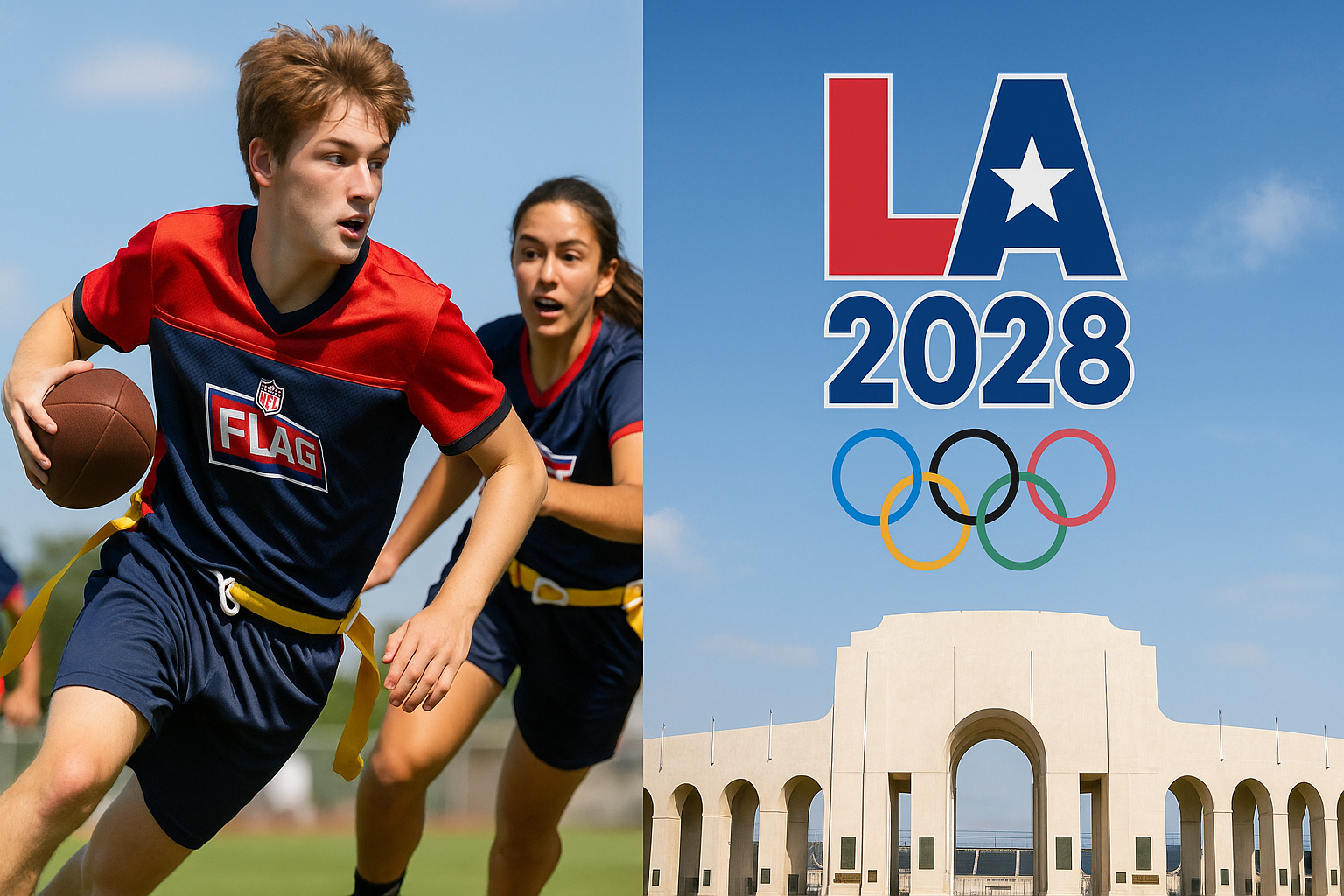
The Rise of Flag Football: Could This Be America’s Next Olympic Obsession?
By PulsPie | August 2025
Introduction: From Backyard Game to Olympic Stage
For decades, flag football was seen as a backyard pastime—something played at summer camps, in middle school PE classes, or during family reunions. But now, it’s aiming for the world’s biggest athletic stage: the Olympic Games.
With its inclusion in the Los Angeles 2028 Olympics, flag football is no longer in the shadow of its full-contact cousin, American football. It’s rapidly gaining popularity not only in the U.S. but also across the globe, with the NFL, youth leagues, and international federations backing its rise.
Could this no-tackle, fast-paced version of football become America’s next Olympic obsession? All signs point to a bold yes.
What Is Flag Football and Why Is It So Popular?
Flag football maintains the core mechanics of American football—passing, running, strategizing—but with one major difference: there’s no tackling. Instead of bringing opponents to the ground, defenders must remove a flag from the ball carrier’s belt to stop the play.
This small change leads to a big shift in how the game is played and perceived:
- Less physical risk makes it more accessible to younger athletes and those wary of injuries.
- Faster pace and smaller teams make it easier to learn and play recreationally.
- Inclusivity: Boys and girls can play together, and co-ed leagues are thriving.
According to USA Football, over 1.5 million children played flag football in the U.S. in 2023—surpassing tackle football in many regions.
NFL’s Big Bet: Backing Flag Football for Global Reach
Behind the scenes of flag football’s Olympic ascent is a strategic push by the NFL. While the league dominates American sports, it has long struggled with global expansion—a challenge the NBA and soccer leagues have tackled successfully.
By championing flag football, the NFL is hoping to:
- Reach new international audiences who may not be familiar or comfortable with full-contact football.
- Showcase the athleticism and tactics of the sport in a format that’s easy to understand and fun to watch.
- Create grassroots interest in countries where football infrastructure is limited.
The NFL Flag initiative has launched leagues in over 15 countries, from Japan and Germany to Brazil and Ghana. Former stars like Russell Wilson, Diana Flores, and Peyton Manning have become vocal ambassadors.
The LA 2028 Olympics: Flag Football’s Breakthrough Moment
In October 2023, the International Olympic Committee (IOC) approved flag football for inclusion in the 2028 Summer Olympics in Los Angeles. This move was groundbreaking for several reasons:
- It marks the first time any form of American football will appear in the Olympics.
- It gives the U.S. a clear opportunity to dominate a new Olympic category.
- It opens doors for non-traditional football nations to compete and grow the sport.
The Olympic version will feature 5-on-5 play on a 50-yard field with two 20-minute halves. Both men’s and women’s divisions will be included.
Gender Equity and Accessibility: A Sport for Everyone
One of flag football’s most compelling aspects is its inclusive nature. Unlike many Olympic sports where men’s teams dominate headlines, flag football has seen equal investment in women’s development.
The NFL and IFAF have partnered to promote girls' flag football in U.S. high schools. Athletes like Diana Flores, quarterback for Team Mexico, have become global role models.
With low-cost equipment and fewer injuries, flag football is rapidly growing in both urban and rural communities around the world.
Challenges and Criticisms: Can It Compete with Traditional Football?
Despite its rise, flag football isn’t without critics. Some say it lacks the physicality and spectacle that define American football. Others worry about the sport’s global competitiveness and whether countries outside the U.S. can field elite teams by 2028.
There are also structural concerns:
- Will NFL stars participate, or will the Olympic roster be amateur-based?
- Can flag football hold audience attention alongside other high-profile Olympic sports?
Still, the sport’s speed, skill, and accessibility make it an exciting, modern fit for the Olympic platform.
Conclusion: A New Era for American Sports on the World Stage
Flag football’s journey from neighborhood parks to the Olympic Games is a testament to how sports evolve with society. As the U.S. prepares to host the world in 2028, it might also be ushering in a new American export: a version of football that is fast, inclusive, and global.
Whether it becomes a permanent Olympic staple or not, one thing is certain: flag football is no longer just a side game. It’s a movement—one that may define the future of American football on the world stage.

